Common Mistakes After a DUI Arrest: What Can Hurt a Colorado DUI Defense Early On
After a DUI arrest in Colorado, many people unintentionally make decisions that complicate their case before it ever reaches court. Some miss important DMV deadlines. Others talk when they don’t need to, post something online, or misunderstand their bond conditions.
These are the mistakes that most often create problems after a DUI arrest in Colorado. They’re common, they happen early, and many people don’t realize the impact until it’s too late. If you were arrested in Durango or elsewhere in Southwest Colorado, this is where people tend to go wrong.
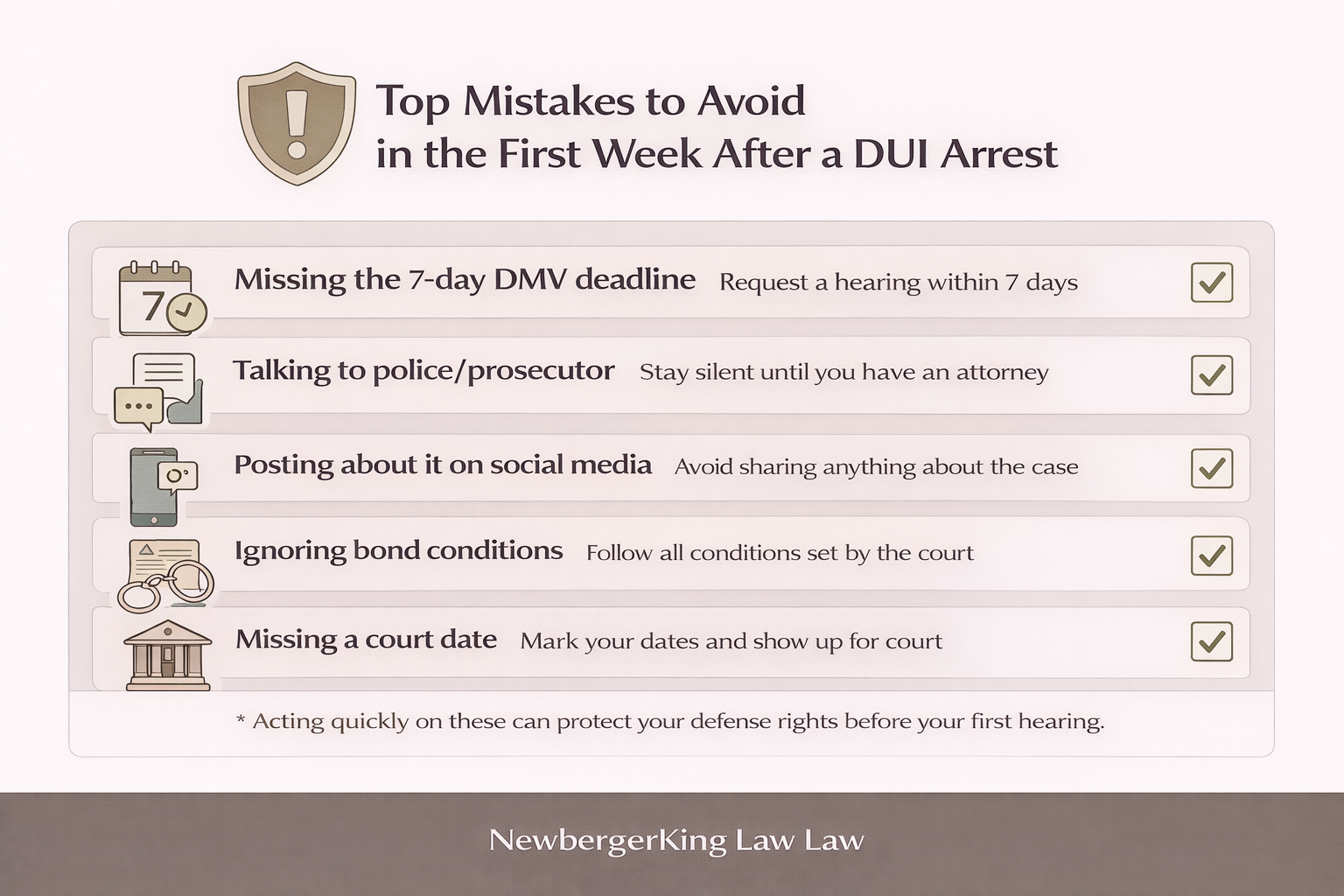
Missing the 7-Day DMV Hearing Deadline
This deadline catches people by surprise because it runs separately from your criminal case.
Breath test or refusal: you have 7 calendar days from the arrest date to request a DMV hearing.
Blood test: you have 7 calendar days from the date the DMV Order of Revocation is delivered by mail—which may be weeks after the arrest.
If DMV doesn't receive a timely hearing request, the revocation can take effect based on the notice and your hearing rights may be treated as waived.
I've had people call on day 8 thinking they still had time—by then, options are often much more limited.
If you missed the deadline, there may be a late-request process in some situations, but it's discretionary and far better to preserve the deadline from the start.
Why people miss it:
They assume the court date on their citation is the important deadline.
Or they think the DMV will contact them first.
The DMV deadline is separate and shorter than your criminal court date.
How to avoid it:
Mark the deadline on your calendar the day you're arrested.
If you're unsure which test you took or when your deadline is, get clarity on the deadline right away.
An attorney can review the Express Consent paperwork/notice, confirm the correct timeline, and submit the request in time.
Learn more about what to do in the first 72 hours after a Colorado DUI.
Talking to Police or Prosecutors Without an Attorney
After your arrest, law enforcement or prosecutors may contact you to "clarify" details, ask follow-up questions, or suggest that cooperation will help your case. It's usually best not to respond without counsel.
Why it's tempting:
You want to explain what happened.
You think if they understand your side, they'll be more lenient.
Maybe you weren't "that drunk" or you had a good reason for driving.
Those explanations don't help. They give prosecutors more material to use against you.
What can happen:
Anything you say becomes part of the record.
Prosecutors will quote your statements in court.
"The defendant admitted to having three beers before driving."
Even clarifications can hurt. "I only had two drinks" becomes evidence that you consumed alcohol before driving.
When to stay silent: As a rule, don't discuss the incident without counsel. You have the right to remain silent and the right to an attorney. Use both.
If law enforcement contacts you after your arrest, say:
"I'm not answering questions without my attorney present."
Then call your attorney.
Jail calls are recorded. If you're calling someone from custody, assume prosecutors will listen to that call. Don't discuss your case, the stop, how much you drank, or anything related to your arrest on a jail phone.
Posting About the Arrest on Social Media
Social media posts are discoverable evidence. Prosecutors look for posts about drinking or being at a bar, photos with alcohol, comments minimizing the arrest, complaints about the officer, or statements about what happened.
The rule is simple: Don't post anything about your arrest, the stop, or your case on any social media platform. Don't let friends tag you in posts from that night. Don't comment on other people's posts about DUIs or your arrest. Assume anything you post could end up being reviewed.
Ignoring Bond Conditions or Missing Court Dates
When you're released after a DUI arrest, the court may set bond conditions. Common bond conditions include no alcohol consumption, no contact with certain people, regular check-ins with pretrial services, or restrictions on leaving the state.
Violate your bond conditions and the court can:
Revoke bond and remand you into custody
Increase bond
Add conditions
Treat the violation as a negative factor in the case
Missing a court date can result in a bench warrant for your arrest. The court won't call to remind you. If you miss your arraignment or any scheduled hearing, law enforcement can arrest you on the warrant.
How to avoid it: Write down all your court dates and bond conditions the day you're released. Set calendar reminders. If you're unsure what your bond conditions are, check your bond paperwork or call your attorney. If you can't make a court date because of an emergency, contact your attorney immediately—they may be able to appear on your behalf or request a continuance.
Protect Your Defense From Day One
The mistakes above can close off defense options before you even get to court. The alternative is straightforward: request your DMV hearing within 7 days, don't answer questions without an attorney, stay off social media, follow your bond conditions, and document what happened while it's fresh.
My background: almost eight years as a Deputy then Senior Deputy Public Defender in Southwest Colorado, handling high volumes of DUI cases in the 22nd and 6th Judicial Districts. Learn more about my experience.
If you've been arrested for DUI in Durango, Cortez, Pagosa Springs, or anywhere in Southwest Colorado,contact NewbergerKing Law for a free consultation.