DUI vs. DWAI in Colorado: What's the Difference and Which Is Worse?
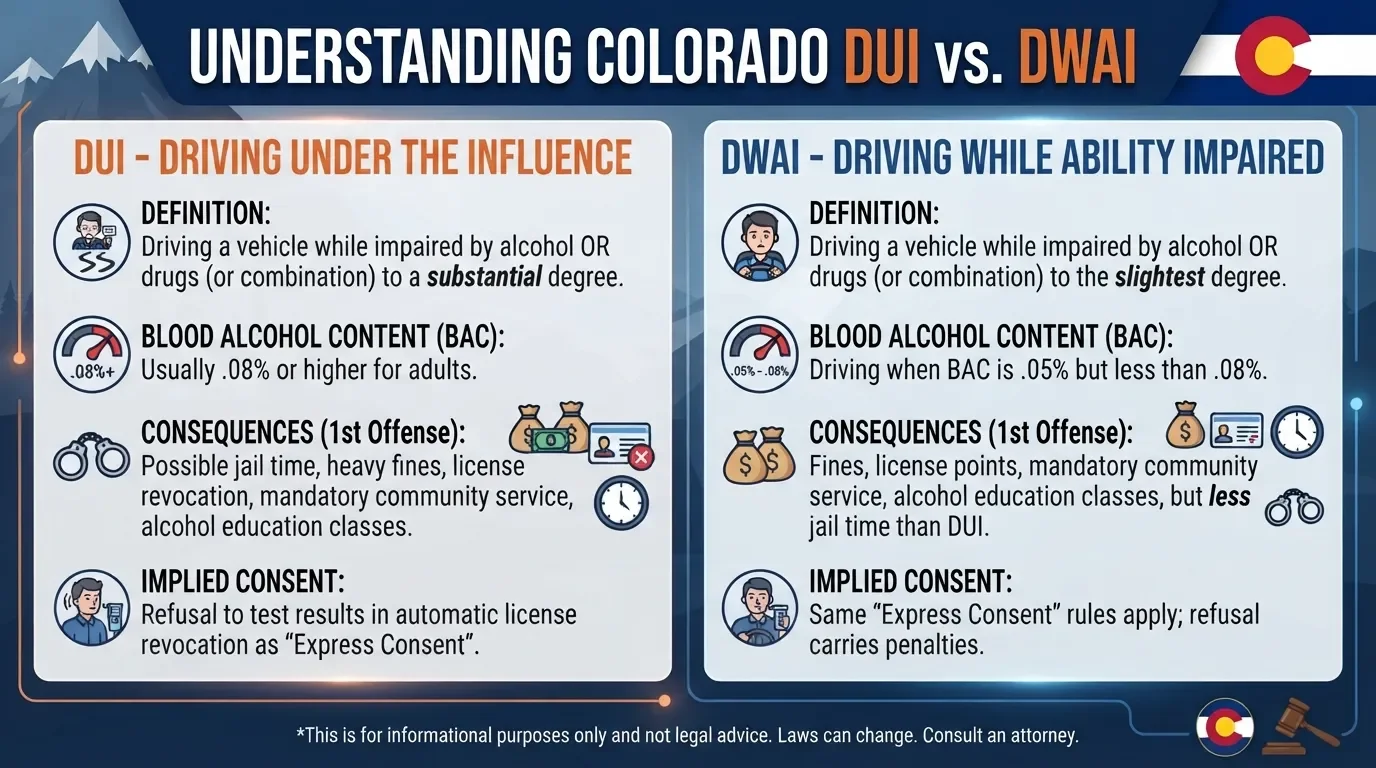
A DUI means a BAC of 0.08 or higher, or substantial impairment. A DWAI means a BAC between 0.05 and 0.079, or slight impairment. DUI can carry harsher penalties, including an automatic 9-month license revocation, while a DWAI does not automatically suspend your license
What Is a DWAI in Colorado?
DWAI stands for Driving While Ability Impaired. You can be charged with a DWAI if your BAC is between 0.05 and 0.079. You can also be charged with a DWAI if the officer believes alcohol or drugs affected your driving even a small amount, even if your BAC was not tested.
Many people assume a DWAI is a minor issue, like a speeding ticket. That is not true. A DWAI is a criminal charge in Colorado. It will show up on your criminal record if you are convicted.
What Is a DUI in Colorado?
DUI stands for Driving Under the Influence. You can be charged with a DUI if your BAC is 0.08 or higher. This is called a "per se" DUI, which means the law treats a BAC of 0.08 or higher as proof of impairment on its own. You can also be charged with a DUI if the officer believes you were substantially impaired by alcohol or drugs, even if your BAC was not tested.
DUI vs. DWAI Penalties in Colorado (First Offense)
The penalties for a first DUI are more severe than the penalties for a first DWAI.
DWAI First-Offense Penalties
| Penalty | Range |
|---|---|
| Jail time | 2 to 180 days |
| Fine | $200 to $500 |
| Community service | 24 to 48 hours |
| Probation | Up to 2 years |
| License | No automatic suspension, 8 points added |
DUI First-Offense Penalties
| Penalty | Range |
|---|---|
| Jail time | 5 days to 1 year |
| Fine | $600 to $1,000 |
| Community service | 48 to 96 hours |
| Probation | Up to 2 years |
| License | Automatic 9-month revocation, at least (the penalty can be greater for a refusal to test) |
[Design note: build this section as a two-column card comparison — DWAI card with a "less severe" badge, DUI card with a "more severe" badge, icon-led rows for jail, fine, community service, and license. Leads with the severity difference visually before the reader compares numbers.]
Does a DWAI Affect Your License the Same Way as a DUI?
No. This is one of the biggest differences between the two charges. A first-time DUI leads to an automatic 9-month license revocation (but the penalty can be greater for a refusal to test). A first-time DWAI does not automatically suspend your license, but it does add 8 points to your driving record.
There is also a strict deadline you need to know about. You have only 7 days from your arrest, or from the date your blood test results come back, to request a hearing with the Colorado DMV. If you miss this deadline, you lose your chance to fight the license action separately from your criminal case.
| Offense | Jail Time | Fine | Community Service |
|---|---|---|---|
| 2nd offense | 10 days to 1 year | $600 to $1,500 | 48 to 120 hours |
| 3rd offense | 60 days to 1 year | $600 to $1,500 | 48 to 120 hours |
| 4th offense+ | 2 to 6 years in prison (felony) | $2,000 to $500,000 | Set by the court |
What Happens on a Second, Third, or Fourth Offense?
Penalties go up with each new offense in Colorado. It does not matter if your past conviction was a DUI or a DWAI. Both count as prior offenses if you were convicted, and both make future penalties more severe.
A fourth offense in Colorado becomes a class 4 felony. This applies if you have three or more prior convictions and pick up a new charge. A felony conviction carries 3 years of mandatory parole after release from prison.
If your BAC was 0.15 or higher, or if you refused testing, you may be labeled a Persistent Drunk Driver. This label leads to greater DMV penalties, even if this is your first arrest.
Can You Get a DUI or DWAI for Marijuana in Colorado?
Yes. Colorado law allows a DUI or DWAI charge for marijuana impairment, not just alcohol. Colorado law allows an inference of impairment if you have 5 nanograms of THC per milliliter of blood or more. This inference can be challenged in court.